


Anti-KCND3 Recombinant Antibody Products
 Loading...
Anti-KCND3 Products
+ Filter
Loading...-
- Derivation: Mouse
- Species Reactivity: Human
- Type: Mouse IgG1
- Application: WB, ICC, IF, IHC, IP
 Compare
- Rabbit Anti-KCND3 Polyclonal Antibody (MRO-2004-CN) (MRO-2004-CN)
-
- Species Reactivity: Human, Mouse
- Type: Rabbit IgG
- Application: WB, IF, IHC, FC
Compare
- Rat Anti-KCND3 Recombinant Antibody (VS-0522-LC158) (VS-0522-LC158)
-
- Species Reactivity: Rat, Frog, Human, Mouse
- Type: Rat IgG2b
- Application: IB, IHC
Compare
- Human Anti-KCND3 Recombinant Antibody (VS-0522-LC159) (VS-0522-LC159)
-
- Species Reactivity: Rat, Frog, Human, Mouse
- Type: Human IgG1
- Application: IB, IHC
Compare
- Rabbit Anti-KCND3 Recombinant Antibody (VS-0522-LC160) (VS-0522-LC160)
-
- Species Reactivity: Rat, Frog, Human, Mouse
- Type: Rabbit IgG
- Application: IB, IHC
Compare
View More Products
Can't find the products you're looking for? Try to filter in the left sidebar.Filter By Tag
More Infomation
Our customer service representatives are available 24 hours a day, from Monday to Sunday. Contact Us
For Research Use Only. Not For Clinical Use.
Creative Biolabs, your trusted partner in cardiovascular research, is proud to present our top-tier anti-KCND3 (Kv4.3) recombinant antibodies. The potassium channel KCND3 (Kv4.3) is the major pore-forming subunit of the transient outward potassium current (Ito) in the human heart, a critical determinant of cardiac action potential duration. These high-quality anti-KCND3 rAbs will be a valuable resource for investigating cardiac arrhythmias, Brugada syndrome and the mechanisms of cardiac repolarization.
KCND3: The Heart's Primary Repolarizing A-type Channel
KCND3, also known as Kv4.3, is the major alpha subunit mediating the fast component of the transient outward potassium current (Ito,fast) in human cardiac myocytes. This rapid, outward potassium current is a key contributor to the early repolarization phase (Phase 1) of the cardiac action potential, and the magnitude and kinetics of Ito are major determinants of the action potential's overall shape and duration. Ito, in turn, plays a major role in regulating cardiac contractility and rhythm. Loss-of-function mutations in KCND3 are linked to Brugada syndrome, a life-threatening, arrhythmogenic cardiac channelopathy.
Alternative Names
KCND3; Potassium Ionic Channel Kv4.3; Potassium Voltage-Gated Channel Subfamily D Member 3; KV4.3; KSHIVB; Potassium Channel, Voltage Gated Shal Related Subfamily D, Member 3; Sha1-Related Potassium Channel Kv4.3; KCND3S; Voltage-Gated K+ Channel; Spinoce
Background
KCND3 (Potassium Voltage-Gated Channel Subfamily D Member 3) is a Protein Coding gene. Voltage-gated potassium (Kv) channels represent the most complex class of voltage-gated ion channels from both functional and structural standpoints. Their diverse functions include regulating neurotransmitter release, heart rate, insulin secretion, neuronal excitability, epithelial electrolyte transport, smooth muscle contraction, and cell volume. Diseases associated with KCND3 include Spinocerebellar Ataxia 19 and Brugada Syndrome 9.
Protein class
Disease related genes, FDA approved drug targets, Human disease related genes, Transporters, Voltage-gated ion channels
Predicted location
Membrane
Single cell type specificity
Cell type enhanced (Excitatory neurons, Inhibitory neurons, Bipolar cells, Oligodendrocyte precursor cells, Cardiomyocytes, Hepatocytes)
Immune cell specificity
Not detected in immune cells
Cell line specificity
Cell line enhanced (OE19, SCLC-21H, U-2 OS, WM-115)
Interaction
Homotetramer or heterotetramer with KCND1 and/or KCND2. Associates with the regulatory subunits KCNIP1, KCNIP2, KCNIP3 and KCNIP4 (By similarity). Interacts with KCNE1, KCNE2, SCN1B and KCNAB1 and DLG1.
Molecular function
Ion channel, Potassium channel, Voltage-gated channel
More Types Infomation
Anti-KCND3 rAb Products
Our anti-KCND3 recombinant antibodies are designed to be isoform-specific and have been carefully validated for their ability to detect the Kv4.3 channel without cross-reacting with other members of the Kv4 family (such as Kv4.2, the predominant Kv4 channel expressed in brain). This isoform specificity is critical for studying cardiac function. Optimized for IHC on heart tissue and Western Blot, our anti-KCND3 rAbs were selected to give you clear, consistent results for your electrophysiology experiments.
Table 1. Featured anti-KCND3 recombinant antibody products at Creative Biolabs.
| Cat. No. | Product Name | Target Species | Host Species | Applications |
| MOB-3025z | Mouse Anti-KCND3 Recombinant Antibody (clone 37D10) | Human | Mouse IgG1 | WB, ICC, IF, IHC, IP |
| VS-0522-LC158 | Rat Anti-KCND3 Recombinant Antibody (VS-0522-LC158) | Rat, Frog, Human, Mouse | Rat IgG2b | IB, IHC |
| VS-0522-LC160 | Rabbit Anti-KCND3 Recombinant Antibody (VS-0522-LC160) | Rat, Frog, Human, Mouse | Rabbit IgG | IB, IHC |
Customer Reviews

Excellent
Au*nMouse Anti-KCND3 Recombinant Antibody (clone 37D10)
We've come to rely on the consistent performance of Creative Biolabs' reagents. Their anti-Kv4.3 antibody has been instrumental in our pharmacological studies, giving us reliable data every time.
13/Feb/2023
rAb Production
In support of world-class cardiovascular research, Creative Biolabs utilizes state-of-the-art production technologies. Our anti-KCND3 recombinant antibodies are produced in optimized expression systems, to ensure that your reagent will recognize the native protein in the context of its full multimeric channel complex and will be a highly specific and active tool for your research.
Featured Anti-KCND3 Recombinant Antibody Production Platforms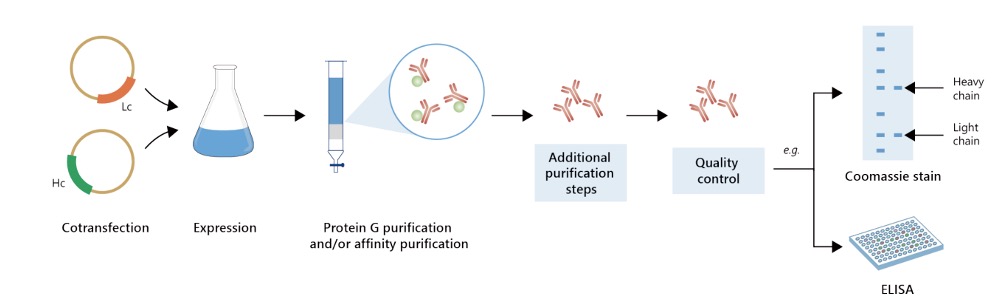
Fig.1 Milligram-scale anti-KCND3 recombinant antibody production.
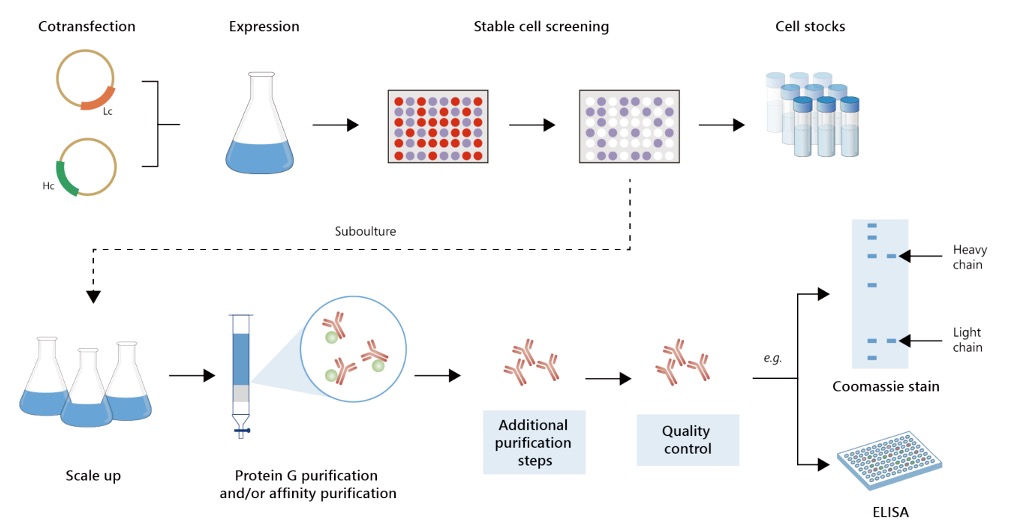 Fig.2 Gram-scale anti-KCND3 recombinant antibody production.
rAb Modalities
Creative Biolabs is committed to providing the most advanced and flexible solutions for cardiovascular research. Our anti-KCND3 recombinant antibodies are available in multiple customizable formats, to accommodate the diverse needs of your experimental designs. Empower researchers around the world to investigate this key regulator of the human heartbeat.
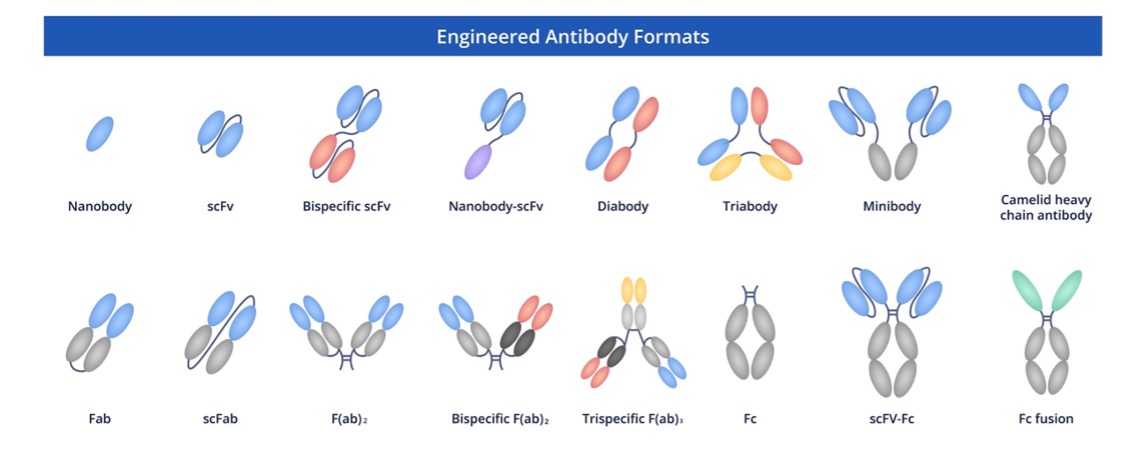 Fig.3 Full-length anti-KCND3 recombinant antibody production and modalities.
Unlock the secrets of cardiac repolarization with Creative Biolabs' premium anti-KCND3 recombinant antibodies. Rigorously validated for performance and designed to give you the highest quality data, our portfolio of KCND3 tools will give you everything you need for your next discovery. Trust our experts to help advance your research. Contact our team today.