


Anti-AIFM1 Recombinant Antibody Products
 Loading...
Anti-AIFM1 Products
+ Filter
Loading...- Rabbit Anti-AIFM1 Recombinant Antibody (clone CBACN-014) (MRO-0038-CN)
-
- Species Reactivity: Human, Mouse, Rat
- Type: Rabbit IgG
- Application: WB, IF, IHC, IP, FC
 Compare
- AbPlus™ Anti-AIFM1 Magnetic Beads (VS-0424-XY9) (VS-0424-XY9)
-
- Target: AIFM1
- Target Species: Human, Mouse, Rat
- Application: IP, Protein Purification
Compare
- AbPlus™ Anti-AIFM1 Magnetic Beads (VS-0724-YC1250) (VS-0724-YC1250)
-
- Target: AIFM1
- Target Species: Human
- Application: IP, Protein Purification
Compare
-
- Derivation: Mouse
- Species Reactivity: Human
- Type: Mouse IgG2a, κ
- Application: ELISA, WB, ICC, FC, IF
Compare
-
- Derivation: Phage display library screening
- Species Reactivity: Human
- Type: Rabbit IgG
- Application: WB, IP, IHC, ICC
Compare
-
- Derivation: Mouse
- Species Reactivity: Human, Mouse, Rat, Monkey
- Type: Mouse IgG
- Application: WB, IHC-p, IF, ICC, FCM, ELISA
Compare
- Anti-AIFM1 Immunohistochemistry Kit (VS-0325-XY67)
-
- Species Reactivity: Human, Mouse, Rat
- Target: AIFM1
- Application: IHC
Compare
- Anti-Mouse AIFM1 Immunohistochemistry Kit (VS-0525-XY244)
-
- Species Reactivity: Human, Mouse, Rat
- Target: AIFM1
- Application: IHC
Compare
- Anti-Human AIFM1 Immunohistochemistry Kit (VS-0525-XY243)
-
- Species Reactivity: Human
- Target: AIFM1
- Application: IHC
Compare
View More Products
Can't find the products you're looking for? Try to filter in the left sidebar.Filter By Tag
More Infomation
Our customer service representatives are available 24 hours a day, from Monday to Sunday. Contact Us
For Research Use Only. Not For Clinical Use.
Creative Biolabs' Mission is to be your one-stop shop for all of your cell death and neurobiology research needs, which is why we have developed the most specific anti-AIFM1 recombinant antibodies. AIFM1 is a central mediator of caspase-independent apoptosis, making it an important protein in studies of programmed cell death. Our high-quality antibodies are ideal for use in studies investigating the functions of AIFM1 in both mitochondrial bioenergetics and apoptosis in cancer and neurodegeneration.
AIFM1: A Mitochondrial Protein with a Dual Role in Life and Death
Apoptosis-Inducing Factor 1, also known as AIFM1, is a mitochondrial flavoprotein that has two functions. In the mitochondria, it functions as an NADH oxidoreductase, and it is important for the assembly and function of Complex I of the respiratory chain. However, if a cell is stimulated to undergo apoptosis, AIFM1 is released from the mitochondria and translocated into the nucleus, where it causes chromatin condensation and large-scale DNA fragmentation, inducing caspase-independent cell death. Mutations in AIFM1 are associated with severe neurologic phenotypes. AIFM1 also has been implicated in cancer and neurodegeneration.
Alternative Names
Apoptosis Inducing Factor Mitochondria Associated 1; Apoptosis-Inducing Factor, Mitochondrion-Associated, 1; Programmed Cell Death 8 (Apoptosis-Inducing Factor); PDCD8; AIF
Background
This gene encodes a flavoprotein essential for nuclear disassembly in apoptotic cells, and it is found in the mitochondrial intermembrane space in healthy cells. Induction of apoptosis results in the translocation of this protein to the nucleus where it affects chromosome condensation and fragmentation. In addition, this gene product induces mitochondria to release the apoptogenic proteins cytochrome c and caspase-9. Mutations in this gene cause combined oxidative phosphorylation deficiency 6 (COXPD6), a severe mitochondrial encephalomyopathy, as well as Cowchock syndrome, also known as X-linked recessive Charcot-Marie-Tooth disease-4 (CMTX-4), a disorder resulting in neuropathy, and axonal and motor-sensory defects with deafness and cognitive disability. Alternative splicing results in multiple transcript variants. A related pseudogene has been identified on chromosome 10. [provided by RefSeq, Aug 2015]
Protein class
Disease related genes, Human disease related genes, Plasma proteins
Predicted location
Intracellular, Membrane (different isoforms)
Single cell type specificity
Cell type enhanced (Proximal tubular cells, Cardiomyocytes)
Immune cell specificity
Low immune cell specificity
Cell line specificity
Low cell line specificity
Interaction
Monomer (oxidized form). Homodimer (reduced form). Upon reduction with NADH, undergoes dimerization and forms tight, long-lived FADH2-NAD charge transfer complexes (CTC) resistant to oxidation (PubMed:24914854, PubMed:20111043, PubMed:23217327, PubMed:27818101). Also dimerizes with isoform 3 preventing its release from mitochondria (PubMed:20111043). Interacts with XIAP/BIRC4 (PubMed:17967870). Interacts (via N-terminus) with EIF3G (via C-terminus) (PubMed:17094969). Interacts with PRELID1 (PubMed:21364629). Interacts with CHCHD4; the interaction increases in presence of NADH (PubMed:26004228).
Molecular function
DNA-binding, Oxidoreductase
More Types Infomation
Anti-AIFM1 rAb Products
Creative Biolabs' anti-AIFM1 recombinant antibodies are designed to have the highest specificity and sensitivity. They have been validated for use in detecting AIFM1 in different subcellular compartments, as well as to detect the translocation of AIFM1 from the mitochondria to the nucleus during apoptosis. They have been optimized for use in applications such as immunofluorescence and Western blotting, and they will provide clean, unambiguous results in your cell death research.
Table 1. Featured anti-AIFM1 recombinant antibody products at Creative Biolabs.
| Cat. No. | Product Name | Target Species | Host Species | Applications |
| ZG-0267F | Mouse Anti-AIFM1 Recombinant Antibody (ZG-0267F) | Human | Mouse IgG | WB, IF |
| ZG-0537J | Rabbit Anti-AIFM1 Recombinant Antibody (clone 4B2) | Human | Rabbit IgG | ELISA, WB, IHC |
| VS13-YC35 | CytoStream™ Rabbit Anti-AIFM1 Recombinant Antibody (VS13-YC35) | Human | Rabbit IgG | WB, ICC, IF, IHC-P, IP, FC |
| VS7-HM60 | Mouse Anti-AIFM1 Recombinant Antibody (clone CBL021HM) | Human | Mouse IgG | WB, IHC-p, IF, ICC, FCM, ELISA |
Creative Quality Control
The hallmark of Creative Biolabs is our quality, which is built into every part of our process. Our anti-AIFM1 recombinant antibodies are produced under a robust quality assurance process. Each lot is extensively tested for purity, specificity, and consistent performance in validated applications, ensuring that you receive a reagent that you can rely on to provide reproducible data and support the integrity of your research.
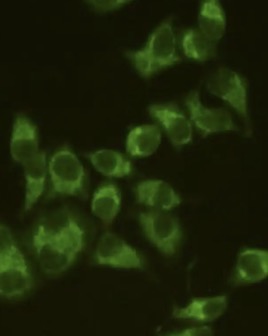 Fig.1 IF analysis of anti-AIFM1 antibody
(Cat# ZG-0267F, Creative Biolabs).
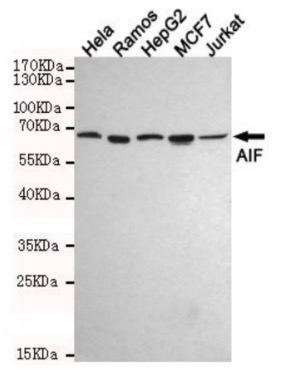 Fig.2 WB analysis of anti-AIFM1 antibody
(Cat# ZG-0267F, Creative Biolabs).
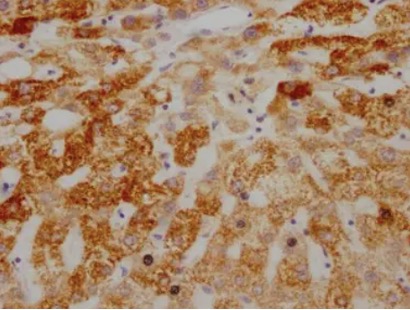 Fig.3 IHC analysis of anti-AIFM1 antibody
(Cat# ZG-0537J, Creative Biolabs).
Customer Reviews

Excellent
De*sMouse Anti-AIFM1 Recombinant Antibody (ZG-0267F)
We used the anti-AIFM1 antibody to detect AIFM1 in our mitochondrial and nuclear fractions on Western blots, and we got a sharp, specific band. The quality is excellent, and it has been critical to our work with models of Parkinson's.
18/Mar/2022
Excellent
Ma**aRabbit Anti-AIFM1 Recombinant Antibody (clone 4B2)
We rely on Creative Biolabs for all of our key reagents, and the anti-AIFM1 antibody has demonstrated excellent lot-to-lot consistency. It is critical to our long-term studies of caspase-independent cell death.
23/Jul/2023
rAb Production
Creative Biolabs' mission is to support the critical work being done in cell biology and neuroscience, and we use the latest technologies in production to help meet your needs. Our anti-AIFM1 recombinant antibodies are expressed in an optimized system to ensure that they recognize epitopes on the native protein, which allows for accurate detection. We are committed to production excellence to ensure that you receive a specific and active research tool.
Featured Anti-AIFM1 Recombinant Antibody Production Platforms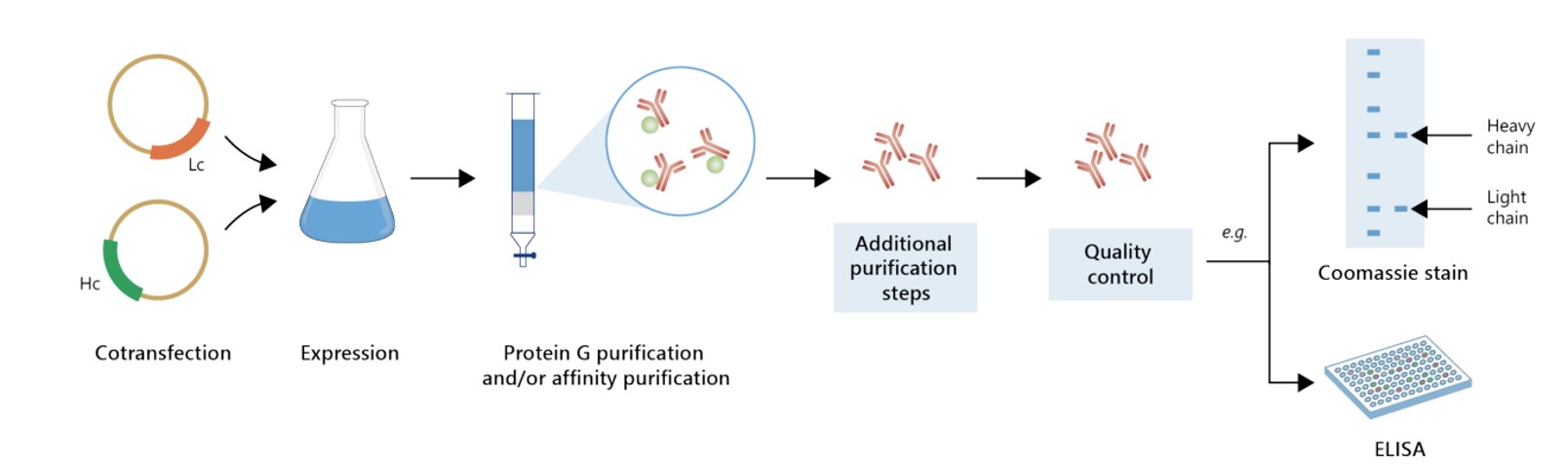
Fig.4 Milligram-scale anti-AIFM1 recombinant antibody production.
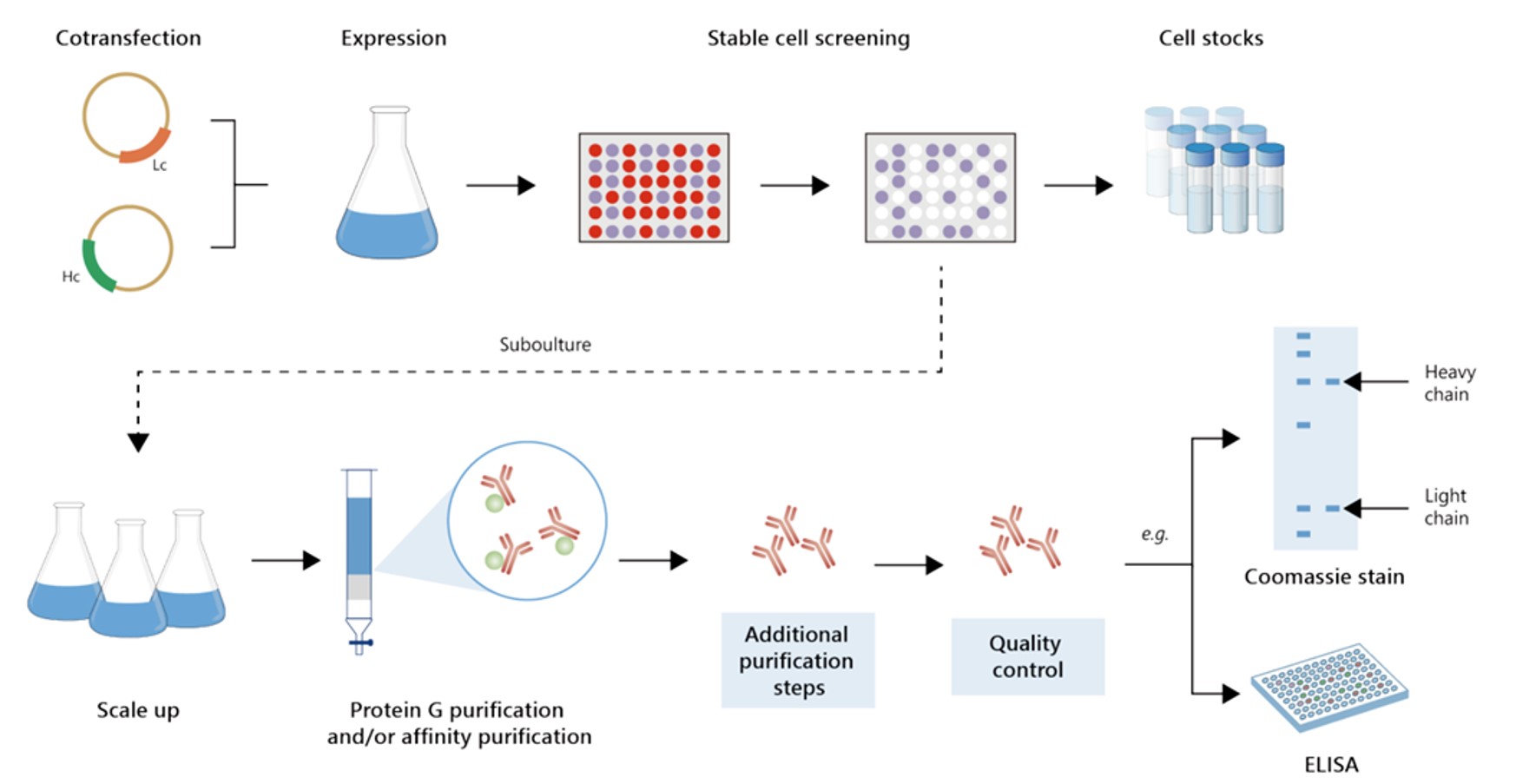 Fig.5 Gram-scale anti-AIFM1 recombinant antibody production.
rAb Modalities
Creative Biolabs is committed to providing researchers with the tools they need to make groundbreaking discoveries, and we do that by offering a range of modalities that can be customized for your needs. Our anti-AIFM1 antibodies are available as full-length IgGs that can be used for a variety of immunoassays and also as fragments for specialized applications.
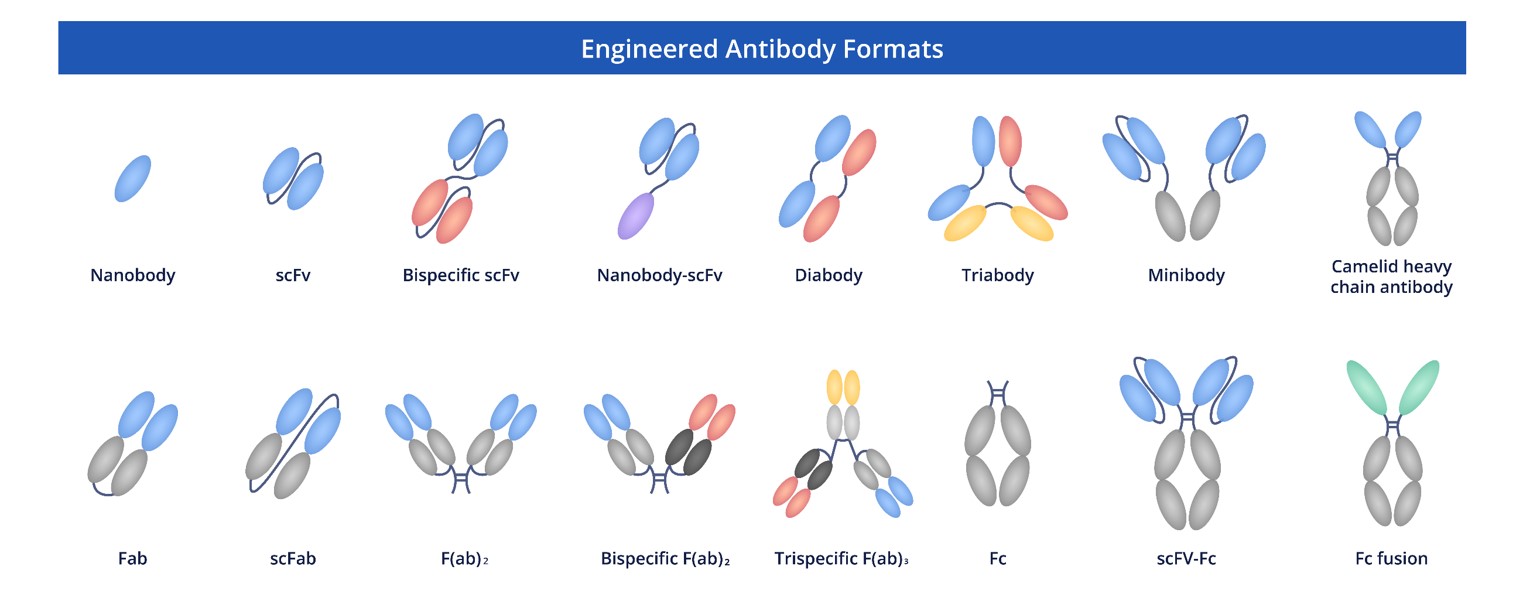 Fig.6 Full-length anti-AIFM1 recombinant antibody production and modalities.
Use Creative Biolabs' recombinant antibodies to investigate the multiple functions of AIFM1. We take pride in the high specificity and extensive validation of our antibodies, which make them the perfect tools for your research into AIFM1, apoptosis, and neurodegeneration. We stand behind our products with unsurpassed quality, so partner with us and let us help power your research. Please contact our team of experts today.