


CTLA4 & PD-1
 Loading...
Anti-CTLA4 & PD-1 Products
+ Filter
Loading...-
- Derivation: Human
- Species Reactivity: Human
- Type: IgG1 - kappa
- Application: WB, FuncS, IF, Neut, ELISA, FC, IP
 Compare
-
- Derivation: Human
- Species Reactivity: Human
- Type: IgG2
- Application: WB, IF, IP, Neut, FuncS, ELISA, FC
Compare
- Anti-Human CTLA4 Recombinant Antibody Fab Fragment (TGN2122.H) (TAB-083MZ-F(E))
-
- Type: Humanized antibody
- Application: ELISA, FC
Compare
- Anti-Human CTLA4 Recombinant Antibody Fab Fragment (TGN2422.H) (TAB-084MZ-F(E))
-
- Type: Humanized antibody
- Application: ELISA, FC
Compare
- Mouse Anti-CTLA4 Recombinant Antibody (NEUT-567CQ) (NEUT-567CQ)
-
- Species Reactivity: Human, Monkey
- Type: Mouse IgG2a, κ
- Application: FC, FuncS, Neut, IP, WB
Compare
- Mouse Anti-CTLA4 Recombinant Antibody (clone L3D10) (NEUT-568CQ)
-
- Species Reactivity: Human
- Type: Mouse IgG1, κ
- Application: FC, Block
Compare
- Mouse Anti-CTLA4 Recombinant Antibody (clone AS32) (NEUT-569CQ)
-
- Species Reactivity: Human
- Type: Mouse IgG1
- Application: WB, Neut
Compare
- Human Anti-CTLA4 Recombinant Antibody (clone YC030) (NEUT-570CQ)
-
- Species Reactivity: Human
- Type: Human IgG1, κ
- Application: Neut
Compare
- Human Anti-CTLA4 Recombinant Antibody (HPAB-N0343-YC) (HPAB-N0343-YC)
-
- Species Reactivity: Human
- Type: Human IgG1, κ
- Application: FC, ELISA
Compare
- Anti-Human CTLA4 Recombinant Antibody Fab Fragment (TGN2122.C) (TAB-085MZ-F(E))
-
- Type: Chimeric antibody (mouse/human)
- Application: ELISA, FC
Compare
- Anti-Human CTLA4 Recombinant Antibody Fab Fragment (TGN2422.C) (TAB-086MZ-F(E))
-
- Type: Chimeric antibody (mouse/human)
- Application: ELISA, FC
Compare
- Anti-Human CTLA4 Recombinant Antibody Fab Fragment (Hu-26B) (TAB-094MZ-F(E))
-
- Type: Humanized antibody
- Application: ELISA
Compare
- Human Anti-CTLA4 Recombinant Antibody (HPAB-0157-FY) (HPAB-0157-FY)
-
- Derivation: Humanized
- Species Reactivity: Human
- Type: Humanized IgG1, κ
- Application: Activ
Compare
- Human Anti-CTLA4 Recombinant Antibody (HPAB-0749LY) (HPAB-0749LY)
-
- Species Reactivity: Human
- Type: Human IgG
- Application: FuncS, ELISA
Compare
- Mouse Anti-CTLA4 Recombinant Antibody (HPAB-1660LY) (HPAB-1660LY)
-
- Species Reactivity: Human
- Type: Mouse IgG
- Application: FC, Block, ELISA
Compare
- Human Anti-CTLA4 Recombinant Antibody (clone 10D1) (HPAB-0051-YC)
-
- Species Reactivity: Human, Monkey
- Type: Human IgG, κ
- Application: ELISA, Cyt, Block
Compare
- Human Anti-CTLA4 Recombinant Antibody; Fab Fragment (TAB-088MZ-F(E)) (TAB-088MZ-F(E))
-
- Derivation: Humanized
- Species Reactivity: Human
- Type: Humanized Fab
- Application: ELISA
Compare
- Human Anti-CTLA4 Recombinant Antibody; Fab Fragment (TAB-091MZ-F(E)) (TAB-091MZ-F(E))
-
- Derivation: Humanized
- Species Reactivity: Human
- Type: Humanized Fab
- Application: ELISA
Compare
- Human Anti-CTLA4 Recombinant Antibody; Fab Fragment (TAB-092MZ-F(E)) (TAB-092MZ-F(E))
-
- Derivation: Humanized
- Species Reactivity: Human
- Type: Humanized Fab
- Application: ELISA
Compare
- Anti-Human CTLA4 Recombinant Antibody (Hu-26B) (TAB-094MZ)
-
- Type: Humanized antibody
- Application: ELISA
Compare
- Anti-Human CTLA4 Recombinant Antibody scFv Fragment (TGN2122.H) (TAB-083MZ-S(P))
-
- Type: Humanized antibody
- Application: ELISA, FC
Compare
- Anti-Human CTLA4 Recombinant Antibody scFv Fragment (TGN2422.H) (TAB-084MZ-S(P))
-
- Type: Humanized antibody
- Application: ELISA, FC
Compare
- Anti-Human CTLA4 Recombinant Antibody scFv Fragment (TGN2122.C) (TAB-085MZ-S(P))
-
- Type: Chimeric antibody (mouse/human)
- Application: ELISA, FC
Compare
- Human Anti-CTLA4 Recombinant Antibody (HPAB-0750LY) (HPAB-0750LY)
-
- Species Reactivity: Human
- Type: Human IgG
- Application: FuncS, ELISA
Compare
- Human Anti-CTLA4 Recombinant Antibody (HPAB-0751LY) (HPAB-0751LY)
-
- Species Reactivity: Human
- Type: Human IgG
- Application: FuncS, ELISA
Compare
- Human Anti-CTLA4 Recombinant Antibody (HPAB-0752LY) (HPAB-0752LY)
-
- Species Reactivity: Human
- Type: Human IgG
- Application: FuncS, ELISA
Compare
- Human Anti-CTLA4 Recombinant Antibody (HPAB-0753LY) (HPAB-0753LY)
-
- Species Reactivity: Human
- Type: Human IgG
- Application: FuncS, ELISA
Compare
- Human Anti-CTLA4 Recombinant Antibody (HPAB-0754LY) (HPAB-0754LY)
-
- Species Reactivity: Human
- Type: Human IgG
- Application: FuncS, ELISA
Compare
- Human Anti-CTLA4 Recombinant Antibody (HPAB-0755LY) (HPAB-0755LY)
-
- Species Reactivity: Human
- Type: Human IgG1
- Application: FuncS, ELISA
Compare
- Human Anti-CTLA4 Recombinant Antibody (HPAB-0756LY) (HPAB-0756LY)
-
- Species Reactivity: Human
- Type: Human IgG
- Application: FuncS, ELISA
Compare
- Human Anti-CTLA4 Recombinant Antibody (HPAB-0757LY) (HPAB-0757LY)
-
- Species Reactivity: Human
- Type: Human IgG
- Application: FuncS, ELISA
Compare
- Human Anti-CTLA4 Recombinant Antibody (HPAB-0758LY) (HPAB-0758LY)
-
- Species Reactivity: Human
- Type: Human IgG
- Application: FuncS, ELISA
Compare
- Human Anti-CTLA4 Recombinant Antibody (HPAB-0759LY) (HPAB-0759LY)
-
- Species Reactivity: Human
- Type: Human IgG
- Application: FuncS, ELISA
Compare
- Human Anti-CTLA4 Recombinant Antibody (HPAB-0760LY) (HPAB-0760LY)
-
- Species Reactivity: Human
- Type: Human IgG
- Application: FuncS, ELISA
Compare
- Human Anti-CTLA4 Recombinant Antibody (HPAB-0761LY) (HPAB-0761LY)
-
- Species Reactivity: Human
- Type: Human IgG
- Application: FuncS, ELISA
Compare
- Anti-Human CTLA4 Recombinant Antibody (Mu-26B) (TAB-093MZ)
-
- Application: ELISA
Compare
- Anti-CTLA4 immunotoxin (scFv)-Sap (AGTO-G015S)
-
- Species Reactivity: Human
- Application: Cytotoxicity assay, Function study
Compare
- Anti-Human CTLA4 Recombinant Antibody Fab Fragment (Mu-26B) (TAB-093MZ-F(E))
-
- Application: ELISA
Compare
- Mouse Anti-CTLA4 Recombinant Antibody; Fab Fragment (TAB-089MZ-F(E)) (TAB-089MZ-F(E))
-
- Species Reactivity: Human
- Type: Mouse Fab
- Application: ELISA
Compare
- Mouse Anti-CTLA4 Recombinant Antibody; Fab Fragment (TAB-090MZ-F(E)) (TAB-090MZ-F(E))
-
- Species Reactivity: Human
- Type: Mouse Fab
- Application: ELISA
Compare
- Human Anti-CTLA4 Recombinant Antibody; scFv Fragment (HPAB-0157-FY-S(P)) (HPAB-0157-FY-S(P))
-
- Derivation: Humanized
- Species Reactivity: Human
- Type: Mouse scFv
- Application: Activ
Compare
- Mouse Anti-CTLA4 Recombinant Antibody; scFv Fragment (HPAB-1660LY-S(P)) (HPAB-1660LY-S(P))
-
- Species Reactivity: Human
- Type: Mouse scFv
- Application: FC, Block, ELISA
Compare
- Human Anti-CTLA4 Recombinant Antibody; scFv Fragment (HPAB-0751LY-S(P)) (HPAB-0751LY-S(P))
-
- Species Reactivity: Human
- Type: Human scFv
- Application: FuncS, ELISA
Compare
- Human Anti-CTLA4 Recombinant Antibody; scFv Fragment (HPAB-0752LY-S(P)) (HPAB-0752LY-S(P))
-
- Species Reactivity: Human
- Type: Human scFv
- Application: FuncS, ELISA
Compare
- Human Anti-CTLA4 Recombinant Antibody; scFv Fragment (HPAB-0753LY-S(P)) (HPAB-0753LY-S(P))
-
- Species Reactivity: Human
- Type: Human scFv
- Application: FuncS, ELISA
Compare
- Human Anti-CTLA4 Recombinant Antibody; scFv Fragment (HPAB-0754LY-S(P)) (HPAB-0754LY-S(P))
-
- Species Reactivity: Human
- Type: Human scFv
- Application: FuncS, ELISA
Compare
- Human Anti-CTLA4 Recombinant Antibody; scFv Fragment (HPAB-0755LY-S(P)) (HPAB-0755LY-S(P))
-
- Species Reactivity: Human
- Type: Human scFv
- Application: FuncS, ELISA
Compare
- Human Anti-CTLA4 Recombinant Antibody; scFv Fragment (HPAB-0756LY-S(P)) (HPAB-0756LY-S(P))
-
- Species Reactivity: Human
- Type: Human scFv
- Application: FuncS, ELISA
Compare
- Human Anti-CTLA4 Recombinant Antibody; scFv Fragment (HPAB-0757LY-S(P)) (HPAB-0757LY-S(P))
-
- Species Reactivity: Human
- Type: Human scFv
- Application: FuncS, ELISA
Compare
- Human Anti-CTLA4 Recombinant Antibody; scFv Fragment (HPAB-0758LY-S(P)) (HPAB-0758LY-S(P))
-
- Species Reactivity: Human
- Type: Human scFv
- Application: FuncS, ELISA
Compare
- Mouse Anti-CTLA4 Recombinant Antibody; Fab Fragment (HPAB-1660LY-F(E)) (HPAB-1660LY-F(E))
-
- Species Reactivity: Human
- Type: Mouse Fab
- Application: FC, Block, ELISA
Compare
- Human Anti-CTLA4 Recombinant Antibody; Fab Fragment (HPAB-610-FY-F(E)) (HPAB-610-FY-F(E))
-
- Species Reactivity: Human
- Type: Human Fab
- Application: ELISA
Compare
- Human Anti-CTLA4 Recombinant Antibody; Fab Fragment (HPAB-0753LY-F(E)) (HPAB-0753LY-F(E))
-
- Species Reactivity: Human
- Type: Human Fab
- Application: FuncS, ELISA
Compare
- Human Anti-CTLA4 Recombinant Antibody; Fab Fragment (HPAB-0754LY-F(E)) (HPAB-0754LY-F(E))
-
- Species Reactivity: Human
- Type: Human Fab
- Application: FuncS, ELISA
Compare
- Human Anti-CTLA4 Recombinant Antibody; Fab Fragment (HPAB-0755LY-F(E)) (HPAB-0755LY-F(E))
-
- Species Reactivity: Human
- Type: Human Fab
- Application: FuncS, ELISA
Compare
- Human Anti-CTLA4 Recombinant Antibody; Fab Fragment (HPAB-0756LY-F(E)) (HPAB-0756LY-F(E))
-
- Species Reactivity: Human
- Type: Human Fab
- Application: FuncS, ELISA
Compare
- Human Anti-CTLA4 Recombinant Antibody; Fab Fragment (HPAB-0757LY-F(E)) (HPAB-0757LY-F(E))
-
- Species Reactivity: Human
- Type: Human Fab
- Application: FuncS, ELISA
Compare
- Human Anti-CTLA4 Recombinant Antibody; Fab Fragment (HPAB-0758LY-F(E)) (HPAB-0758LY-F(E))
-
- Species Reactivity: Human
- Type: Human Fab
- Application: FuncS, ELISA
Compare
- Human Anti-CTLA4 Recombinant Antibody; Fab Fragment (HPAB-0759LY-F(E)) (HPAB-0759LY-F(E))
-
- Species Reactivity: Human
- Type: Human Fab
- Application: FuncS, ELISA
Compare
- Human Anti-CTLA4 Recombinant Antibody; Fab Fragment (HPAB-0760LY-F(E)) (HPAB-0760LY-F(E))
-
- Species Reactivity: Human
- Type: Human Fab
- Application: FuncS, ELISA
Compare
- Human Anti-CTLA4 Recombinant Antibody (clone CBL007LY); Fab Fragment (HPAB-0477LY-F(E))
-
- Species Reactivity: Human
- Type: Human Fab
- Application: Block, ELISA
Compare
- Mouse Anti-CTLA4 Antibody Fab Fragment (HK44) (HPAB-0478LY-F(E))
-
- Species Reactivity: porcine marks virus
- Type: Fab
- Application: WB, FITC
Compare
- Human Anti-CTLA4 Recombinant Antibody; Fab Fragment (HPAB-0219-WJ-F(E)) (HPAB-0219-WJ-F(E))
-
- Species Reactivity: Human
- Type: Human Fab
- Application: ELISA, WB, FC
Compare
- Human Anti-CTLA4 Recombinant Antibody; Fab Fragment (HPAB-0220-WJ-F(E)) (HPAB-0220-WJ-F(E))
-
- Species Reactivity: Human
- Type: Human Fab
- Application: ELISA, WB, FC
Compare
- Human Anti-CTLA4 Recombinant Antibody; Fab Fragment (HPAB-611-FY-F(E)) (HPAB-611-FY-F(E))
-
- Species Reactivity: Human
- Type: Human Fab
- Application: ELISA
Compare
- Human Anti-CTLA4 Recombinant Antibody; scFv Fragment (HPAB-0219-WJ-S(P)) (HPAB-0219-WJ-S(P))
-
- Species Reactivity: Human
- Type: Human scFv
- Application: ELISA, WB, FC
Compare
- Human Anti-CTLA4 Recombinant Antibody; scFv Fragment (HPAB-0220-WJ-S(P)) (HPAB-0220-WJ-S(P))
-
- Species Reactivity: Human
- Type: Human scFv
- Application: ELISA, WB, FC
Compare
- Human Anti-CTLA4 Recombinant Antibody; scFv Fragment (HPAB-0221-WJ-S(P)) (HPAB-0221-WJ-S(P))
-
- Species Reactivity: Human
- Type: Human scFv
- Application: ELISA, WB, FC
Compare
- Human Anti-CTLA4 Recombinant Antibody; scFv Fragment (HPAB-N0343-YC-S(P)) (HPAB-N0343-YC-S(P))
-
- Species Reactivity: Human
- Type: Human scFv
- Application: FC, ELISA
Compare
- Human Anti-CTLA4 Recombinant Antibody; Fab Fragment (HPAB-0749LY-F(E)) (HPAB-0749LY-F(E))
-
- Species Reactivity: Human
- Type: Human Fab
- Application: FuncS, ELISA
Compare
- Human Anti-CTLA4 Recombinant Antibody; Fab Fragment (HPAB-0750LY-F(E)) (HPAB-0750LY-F(E))
-
- Species Reactivity: Human
- Type: Human Fab
- Application: FuncS, ELISA
Compare
- Human Anti-CTLA4 Recombinant Antibody; Fab Fragment (HPAB-0751LY-F(E)) (HPAB-0751LY-F(E))
-
- Species Reactivity: Human
- Type: Human Fab
- Application: FuncS, ELISA
Compare
- Human Anti-CTLA4 Recombinant Antibody; Fab Fragment (HPAB-0752LY-F(E)) (HPAB-0752LY-F(E))
-
- Species Reactivity: Human
- Type: Human Fab
- Application: FuncS, ELISA
Compare
- Anti-CTLA4 immunotoxin (scFv)-PE (AGTO-G015E)
-
- Species Reactivity: Human
- Application: Cytotoxicity assay, Function study
Compare
- Mouse Anti-CTLA4 Recombinant Antibody; Fab Fragment (TAB-087MZ-F(E)) (TAB-087MZ-F(E))
-
- Species Reactivity: Human
- Type: Mouse Fab
- Application: ELISA
Compare
- Human Anti-CTLA4 Recombinant Antibody; scFv Fragment (HPAB-0749LY-S(P)) (HPAB-0749LY-S(P))
-
- Species Reactivity: Human
- Type: Human scFv
- Application: FuncS, ELISA
Compare
- Human Anti-CTLA4 Recombinant Antibody; scFv Fragment (HPAB-0750LY-S(P)) (HPAB-0750LY-S(P))
-
- Species Reactivity: Human
- Type: Human scFv
- Application: FuncS, ELISA
Compare
- Human Anti-CTLA4 Recombinant Antibody (clone 10D1); Fab Fragment (HPAB-0051-YC-F(E))
-
- Species Reactivity: Human, Monkey
- Type: Human Fab
- Application: ELISA, Cyt, Block
Compare
- Human Anti-CTLA4 Recombinant Antibody; Fab Fragment (HPAB-0157-FY-F(E)) (HPAB-0157-FY-F(E))
-
- Derivation: Humanized
- Species Reactivity: Human
- Type: Humanized Fab
- Application: Activ
Compare
- Human Anti-CTLA4 Recombinant Antibody (clone 10D1); scFv Fragment (HPAB-0051-YC-S(P))
-
- Species Reactivity: Human, Monkey
- Type: Human scFv
- Application: ELISA, Cyt, Block
Compare
- Recombinant Mouse Anti-CTLA4 Antibody (MOB-0317MC)
-
- Species Reactivity: Human, Rat
- Application: ELISA, FACS
Compare
- Anti-CTLA4 immunotoxin (scFv)-Mel (AGTO-G015M)
-
- Species Reactivity: Human
- Application: Cytotoxicity assay, Function study
Compare
View More Products
Can't find the products you're looking for? Try to filter in the left sidebar.Filter By Tag
More Infomation
Our customer service representatives are available 24 hours a day, from Monday to Sunday. Contact Us
For Research Use Only. Not For Clinical Use.
Background
Every year, thousands of dogs are diagnosed with cancer. Canine cancers share many of the characteristics of human cancers, including tissue location, tumor progression, and response to chemotherapy and radiation. Unfortunately, the canine lymphocyte population is not as well defined as human lymphocytes, and reagents targeting the immune checkpoint pathway have not been widely used in veterinary research. Interruption of the programmed death 1 (PD-1)/programmed death ligand 1 (PD-L1) pathway is an established and effective therapeutic strategy in human oncology and may also be effective in the treatment of canine cancers.
Cytotoxic T-lymphocyte-associated protein 4 (CTLA4) is an immune checkpoint receptor expressed on activated T cells and regulatory T cells (Tregs). It competes with CD28 for binding to B7 ligands (CD80/CD86) on antigen-presenting cells (APCs), suppressing T cell activation and limiting immune responses to self-antigens. Tumors exploit CTLA4 to evade anti-tumor immunity. Monoclonal antibodies blocking CTLA4 (ipilimumab, tremelimumab) enhance T cell activation and expansion, unleashing anti-tumor immunity. Approved for melanoma, renal cell carcinoma (RCC), and colorectal cancer, CTLA4 inhibitors are often combined with PD-1/PD-L1 blockers for synergistic efficacy.

Related Diseases
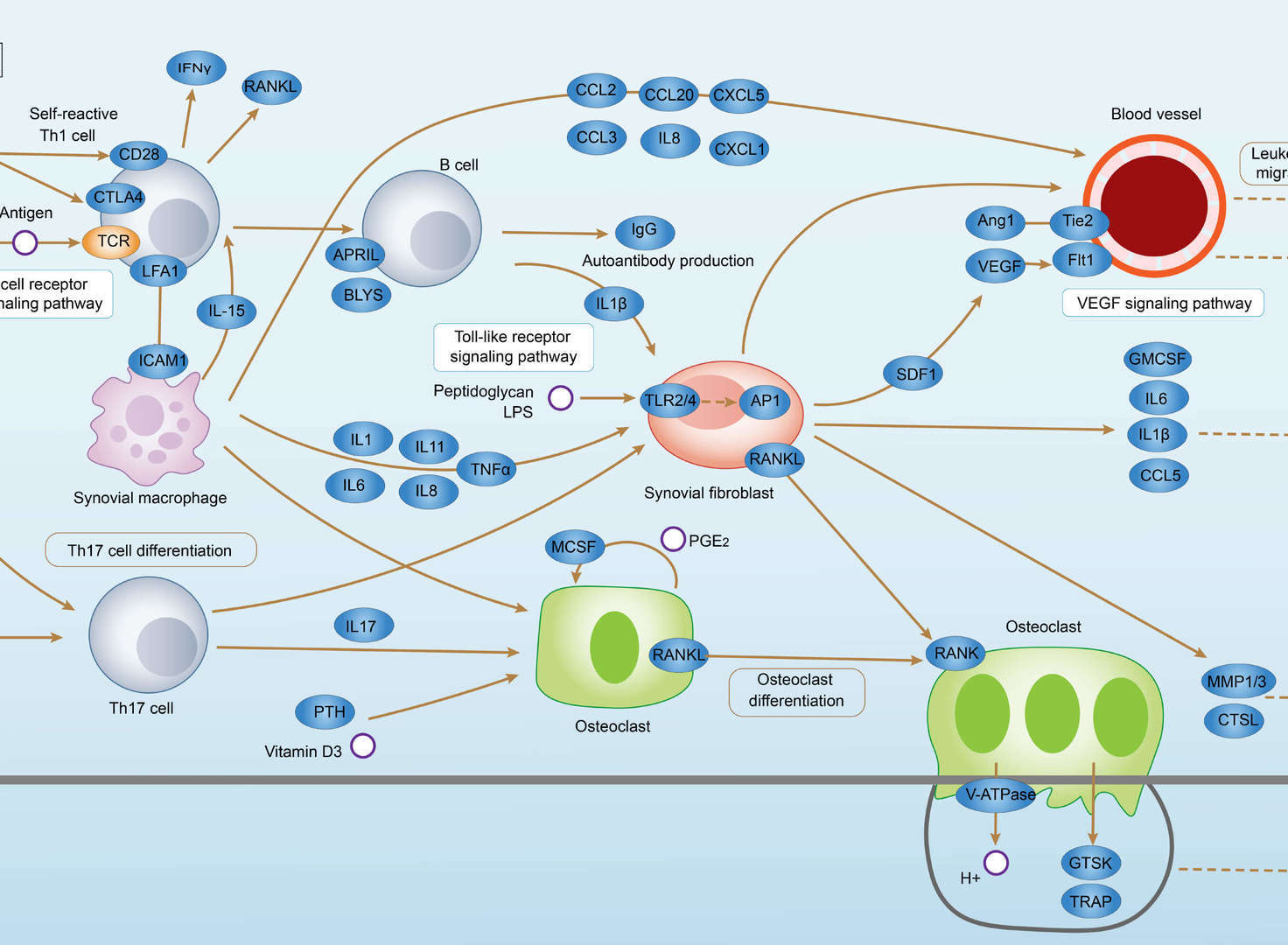 Rheumatoid Arthritis